
Prenuptial/Postnuptial Agreements Lawyer
If you’re planning on getting married or are already married, a prenuptial agreement or postnuptial agreement can outline property division and spousal support in a divorce or legal separation.
Prenuptial and postnuptial agreements are essential for clients with significant assets or debts before and after marriage. Circumstances like having a prior divorce or children from a previous marriage may justify the cost and effort of getting the agreement.
An experienced Certified Family Law Specialist can help you with the mandatory disclosures, negotiate terms, and draft an agreement that fits your circumstances.
Schedule Your Free Prenuptial Or Postnuptial Agreement Consultation Today.
Call For Your Free 1 Hour Consultation 1-877-864-5193
What Is A Prenuptial Agreement?
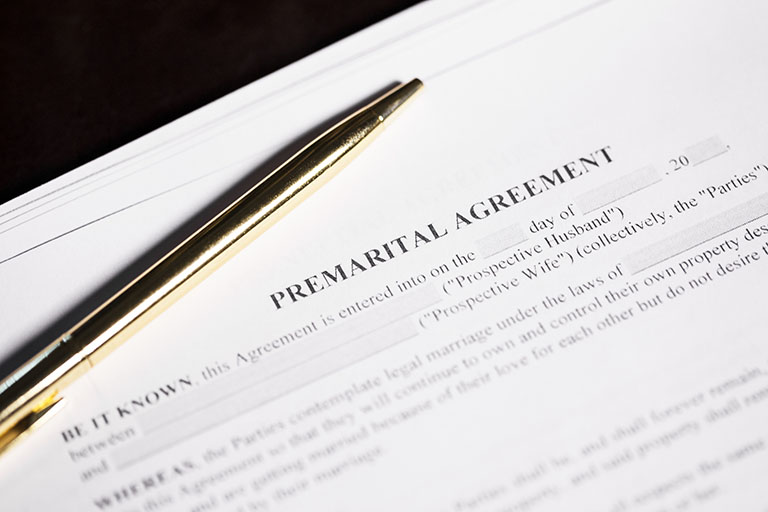
A prenuptial agreement, also known as a premarital agreement or prenup, is a legal contract that two parties sign before entering the institution of marriage. If drafted correctly, the contract dictates what will happen with a couple’s assets and debts should the marriage end in a divorce. This can take a lot of the uncertainty out of the question when facing a divorce.
What Is A Postnuptial Agreement?
A prenuptial agreement is protected under California Family Code Section 1615, but a postnuptial agreement is not. It’s a contract entered into by people who are already married and wish to establish changes to community property and separate property and other rights and obligations.
For postnuptial agreements to be valid and enforceable, each spouse must provide full and fair disclosure of their assets, debts, income, and obligations.
Spouses must be fully aware of the entire circumstances of the marriage and what the community (couple) acquired from the date of marriage.
Protect Your Assets In Case Of Divorce.
Kim is Cooperative and Strategic
“Kim is an amazing attorney. She is cooperative, strategic, and fierce at the same time. You will be in amazing hands with Kim.” ~ Avvo
Proven Prenuptial/Postnuptial Agreement Process
Clients seeking prenuptial agreements or postnuptial agreements can rely on an experienced family law attorney from Lewellen Family Law Group. You will receive legal advice based on years of representing clients just like you to protect your rights and remain safe should a divorce occur. While each client’s agreement is unique based on their assets, owning a business, and debt, we craft agreements for each specific situation, and we start each agreement with our proven process, which includes:
1. Free Initial Consultation
2. Establish Goals and Method
From the very beginning when you meet with Kimberly Lewellen she will work directly with you when you choose to have us represent you she will examine the unique issues surrounding your prenuptial or postnuptial agreement and work with you to establish the goals and identify legal tools to best achieve them.
3. Prepare A Contract
Once we understand all your premarital or marital property, we prepare an equitable agreement for both parties to review that accounts for all the documents and documentation the California Family Courts will require in the event of a divorce.\
4. We Diligently Represent You in Court
If your marriage ends, you can have peace of mind that you can return to a family law firm with years of experience in negotiating, arguing for, and attaining results that are in the best interest of our clients and their families.
Additional Family Law Services We Provide
Frequently Asked Questions About Prenuptial & Postnuptial Agreements
What Is California's Premarital Agreement Law?
California’s Uniform Premarital Agreement Act (UPAA) outlines the rules and requirements for prenuptial agreements. Properties in a prenup can include real estate, financial interests, income, earnings, debts, and other present or future assets. According to the UPAA, for a prenuptial agreement to be valid, it cannot include:
- Anything regarding child custody or child support
- Spousal maintenance requirements (unless the affected spouse is represented by legal counsel)
- Any requirements for one spouse to commit illegal acts
- Unfair, unjust, exploitive, or deceptive terms
- Non-financial requirements
- Terms regarding the relationship
California courts will not enforce verbal prenuptial agreements. If a spouse wishes to enforce the terms of a prenup, they must have a written, signed, and notarized legal document.
California law also requires a minimum of a 7 day review period from the date the final draft of the prenuptial agreement is agreed upon to the date the prenuptial agreement is signed by the parties. Failure to honor the review period can cause the prenuptial agreement to be deemed invalid.
What happens to your estate if you do not have a premarital or postmarital agreement?
If you opt not to enter into a prenuptial or postnuptial agreement, you are subject to community property law and state law on spousal support, as the default. Prenuptial and postnuptial agreements are powerful tools to settle a case without the often high conflict and protracted nature of a fully disputed divorce case.
If you move to another state, even if a couple has a prenuptial or postnuptial agreement, it will likely apply and you will need a California attorney to explain the legal consequences in the other state court. The Agreement cannot determine subject matter jurisdiction because “SMJ” cannot be waived and is determined based on facts existing at the time of filing.